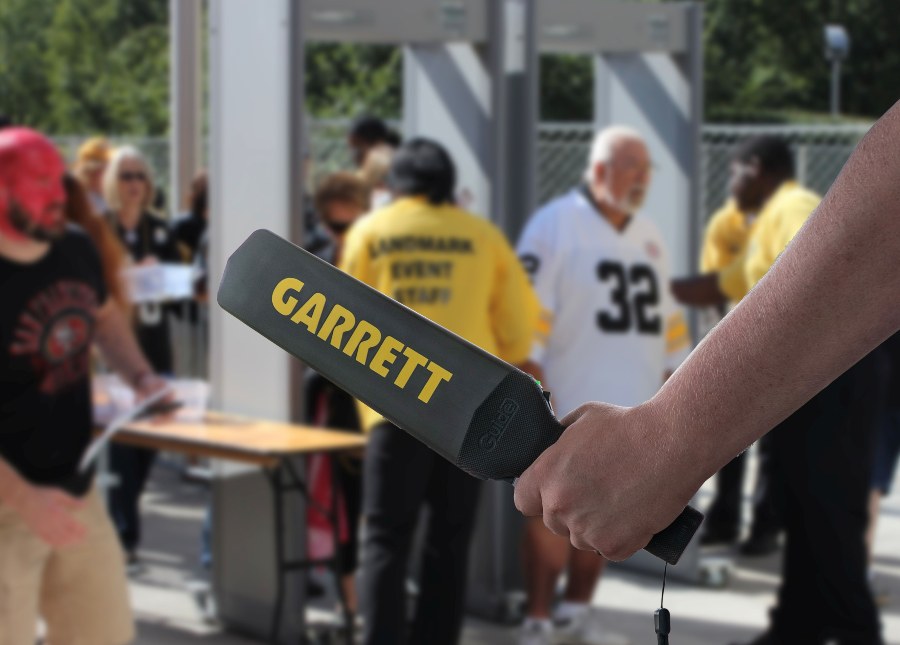

Nathan Dula, Security Marketing Manager, Garrett Metal Detectors tells ISJ why secondary screening is an essential yet overlooked aspect of risk management.
From your football team’s stadium to your local concert arena or an international airport, you’ve likely been through a security checkpoint recently. In fact, millions of people pour through them every day.
In recent years, increased global mobility, tech advancements and a desire to protect assets from sophisticated threats has led to the investment of billions of dollars into primary security measures – in 2023, the physical security industry was valued at $405b globally.
But, how can those in the position of protecting passengers, guests and assets ensure that these investments are paying off in the form of continued risk management?
Whether it be the latest walk-through metal detector, camera or biometric solution or a direct investment in seasoned staffing professionals, systems must be both robust and adaptive; these investments can inspire confidence as a first line of defence at your nearest checkpoint – whether it’s a park, government building or elsewhere.
However, they do not make any guarantees. For this reason, though less visible to the public, secondary screening plays a crucial role in identifying hidden risks, mitigating threats and serving as the most decisive layer in safeguarding people and assets.
What is secondary screening?
To appreciate the potential impact of secondary screening, it’s important to understand what it means: Secondary screening refers to a more detailed, targeted inspection of individuals, belongings or vehicles that have triggered suspicion or alerts at the initial primary screening checkpoint.
While primary screening typically uses standard, uniform methods – such as walk-through metal detectors, basic identification checks or automated questionnaires – secondary screening dives deeper and its success or failure lies in the hands of the professional’s instincts.
What does this look like? It can include anything from intensive questioning, detailed document verification, use of hand-held scanners, full-body scans, chemical trace detection, manual pat-downs or behavioral analysis.
Secondary screening is not arbitrary.
It is often risk-based, meaning that individuals or items are flagged for further review based on a combination of real-time data, historical information, behavioral cues and technological alerts.
This layered approach to security adds nuance to the broader screening mechanisms in the primary phase and can often lead to critical discoveries.
We like to say that “primary screening and secondary screening work together like your washer and dryer,” because secondary screening is what makes primary screening successful.
Why secondary screening matters
Primary screening methods are designed for speed and scalability.
They are meant to help teams and security staff leverage the tools at their disposal to quickly process large volumes of people, likely during peak moments – think a gameday rush or an airport the day before a holiday weekend.
While this works well for routine security needs, it is inherently limited in detecting sophisticated threats – and can easily be exploited in the scenarios described above.
For example, a person carrying a forged passport or contraband may pass undetected through primary layers unless something raises suspicion.
Something like this is even more likely to occur when there’s a large influx of people or when staffing shortages are a factor.
Secondary screening acts as a failsafe – a way to catch what the first round might miss.
It allows security teams to apply specialised tools and focused scrutiny where it’s most needed, increasing the chance of intercepting high-risk individuals or items.
The other factor to consider is the cues and how they can help specify the threats picked up by primary screening.
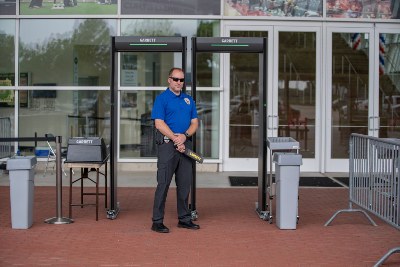
When a general alert is flagged during the primary screening process, it can either be established or dismissed intelligently through the specific examination of secondary screening.
Remember, not everyone poses the same level of risk, so taking a one-size-fits-all approach can be inefficient and potentially intrusive.
Secondary screening can speed up this process by taking a risk-based approach to security, ensuring that high-risk individuals can be pulled aside while allowing the vast bulk of “clean” patrons to pass through without stopping.
Finally, secondary screening can serve as a deterrent to bad actors looking to exploit a weak primary security layer, who are less likely to take chances when they know their tactics could be subject to deeper scrutiny.
On the other end, when implemented fairly and transparently, secondary screening enhances public trust.
Passengers, employees and guests feel safer when they know there’s a layered system in place that goes beyond the surface.
High-impact settings for secondary screening
While secondary screening can be valuable anywhere security is a concern, the below environments are among the most essential examples of where secondary screening can make a difference:
- Airports and border crossings – airports and border controls implement layered inspections to prevent smuggling, trafficking and terror-related threats. Secondary screening in these settings can include further passport validation, drug-sniffing dogs, behavioral profiling or biometric cross-checks. Customs and immigration officers rely heavily on risk profiling to determine who should be pulled aside. This can be based on travel history, visa status or flagged watch lists. Without this extra layer, the chances of illicit goods or unauthorised persons entering a country can increase dramatically
- Schools and correctional facilities – these settings share many similarities under the surface. Both settings are examples of places where concealed weapons or contraband can be smuggled, often in a crude manner by students or visitors. While primary security features such as walk-through metal detectors are commonplace in both settings, secondary screening is essential to protecting staff as well as the broader population
- Large-scale events and mass gatherings – concerts, sporting events and other large gatherings (festivals, political rallies, etc.) attract large crowds – and unfortunately, this comes with potential threats. While initial checks might involve bag scans, walk-through detection and ticket validation, secondary screening allows for targeted interventions when an individual displays suspicious behaviour or when primary alert systems are triggered. Such systems often rely on hand-held scanning technology such as our Garrett Guide to filter out potential risks in dynamic, high-pressure environments
- Government buildings and high-security areas – at embassies, military bases, courthouses, research labs and other high-value sites, relying solely on primary screening can be insufficient. Individuals may appear unthreatening but possess falsified credentials or harmful intent. With secondary screening, teams can verify identities through multi-factor processes, check visitor backgrounds in real time and analyse behavioral cues before granting deeper access. This approach is critical in insider threat detection, where a seemingly cleared individual may pose a risk
- Corporate and financial sectors – for banks, data centres and research facilities, security isn’t just about who enters the building but who accesses specific data or systems. Secondary screening mechanisms ensure that only the right people can access the right information at the right time
Best practices for effective implementation
Secondary screening, while a powerful tool, must be implemented thoughtfully to avoid inefficiency, discrimination and overreach.
Some of the best practices we recommend include: Data-driven decision-making – trust in your analytics and threat intelligence to guide who is flagged, reducing bias and increasing effectiveness; transparency and training – ensure that your security staff are well-trained and that they can effectively communicate with individuals being screened, helping them understand the process to avoid escalation; continuous evaluation and flexibility – regularly assess the effectiveness of screening criteria and use secondary screening as an opportunity to evaluate and implement new technologies to help stay ahead of evolving threats.
Consider the idea that a security checkpoint does not presume innocence – it establishes it.
Primary screening exists to identify patrons of heightened risk, while secondary screening exists to provide the verdict of guilty or innocent.
Each assumption of innocence during the screening process is an opportunity for criminals to hide – and it is the job of secondary screening team to figure out which group each heightened-risk patron is in.