MCX: The heartbeat of mission critical communications

James Thorpe
Share this content
MCX technology is improving the effectiveness and reliability of mission critical deployments, says Anatoli Levine, Director of Products and Standards, Softil.
The ability to inform a group about your status, ask for help or inform about impending danger is critical, hence the appropriate name of mission critical communications used for all group communications of first responders, military groups and special forces.
Group communications are mission critical, and must be secure, reliable and ubiquitously limitless.
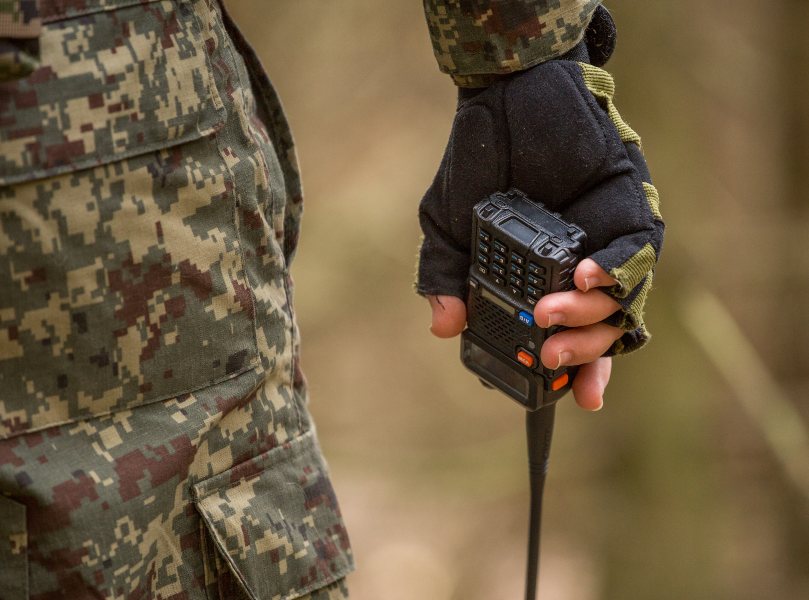
Even today, when billions of people are carrying a few of the 1990s Cray supercomputers in their pockets and anyone can reliably call anyone without any regard to location, reliable mission critical group communications are very clustered and still mostly function as bulky radios, not capable of much anything but transmitting voice.
Luckily, this situation is changing, as the world is starting to embrace the power of ubiquitous mobile broadband networks to deliver secure, reliable and limitless group communications.
End-to-end ubiquitous communications can only be based on open standards. 3GPP, the leading standards development organisation for mobile communications, started developing a new set of standards for mission critical group communications with Release 12 that introduced group communication enablers.
Release 13 was the first release to introduce mission critical group communications starting with push to talk (now known as mission critical push to talk or MCPTT).
Release 14 added standards for mission critical video (MCVideo) and mission critical data (MCData) which also included short data services (messaging).
All three services combined (MCPTT, MCVideo and MCData) are now conversely called MCX. From there on, moving into Release 20, mission critical communications evolved to add LMR and system to system interworking, address railways-specific requirements becoming a foundation for FRMCS (Future Railway Mobile Communication System), add satellite communications and lots more.
Modernising public safety
From the very beginning, mission critical communication standards were designed to address the needs of public safety communications, i.e. to be robust, reliable and highly secure.
Mission critical communications have their own dedicated set of network quality of service settings to guarantee higher priority for first responder communications and the ability to pre-empt non mission critical communications if such need would arise.
Mission critical communications are highly secure, using a set of best-of-breed 3GPP security standards ensuring strong user authentication, elaborate user authorisation for efficient communication management, strong signalling and media encryption and integrity protection both for group communications and private calls for push-to-talk, video and data communications.
This MCX technology has already been proven in the field and in deployment for more than seven years.
In South Korea, early MCX communication solutions for the KoRail high-speed trains went into deployment at the beginning of 2018. By the end of 2023, South Korea public safety communications became all MCX.
In the US, the Southern Linc Critical Linc LTE network had been delivering MCPTT services to utilities and first responders for over five years and getting rave user reviews as a result.
The Georgia State Patrol started using Critical Linc MCPTT service in 2023, boasting the fact that the new LTE-based MCPTT service is more reliable than the old LMR technology it previously used. The majority of European countries including the UK publicly shared plans to start MCX deployments in early 2027 with the goal of sunsetting old TETRA technologies by 2030.
Bringing public safety communications into the realm of mobile broadband has tremendous value and is critically necessary.
While useful and reliable, LMR-based group communication systems exist in silos, relying on proprietary solutions, gateways of gateways upon gateways for any voice communications across agencies for any data exchange, data extraction, data processing and, conversely, just-in-time decision-making.
Using group communications over ubiquitous mobile broadband networks, such as modern LTE and 5G networks, not only enables new types of communications for first responders, such as video, data and location-based services, but it also simplifies integration with other IP-based solutions such as situational awareness, AI, analytics, augmented and mixed reality and lots more.
All of a sudden, public safety has access to the most powerful set of tools, all powered by the same ubiquitous mobile broadband networks and available literally everywhere on the planet.
Technology evolution
Despite all the unequivocal advantages of standards-based broadband mission critical group communications, the new communication technology is embraced by first responders via evolution, not revolution.
Many solution elements need to be addressed before MCX becomes widespread.
Device form-factor (familiar to first responders), customary and field-proven device controls, easy to use, intuitive and efficient UI and UX, device reliability and longevity are some of the most “on-the surface” issues.
Then comes interoperability between clients and MCX systems, LMR interworking and MCX systems interconnections, to handle massive network traffic generated by the mass events. And, let’s not forget ensuring quality and legibility of communications.
Regulations, policies, legal practices, difference in relevant laws between jurisdictions and countries are also very impactful factors in the successful deployment of mission critical broadband communications and sometimes present formidable challenges to overcome.
And let’s not forget the spectrum – we should’ve probably mentioned it first, but spectrum, the digital currency of the millennium, is scarce, and designating an ample amount of spectrum to the needs of public safety is often an undertaking in itself, ensuring that broadband public safety communications can efficiently operate without impeding on the general public’s needs.
Yes, mainstream MCX doesn’t materialise easily, but it is a worthwhile target for the betterment of all.
There are other technological challenges that are currently being addressed, which need to be successfully resolved before MCX-based public safety communications will completely replace LMR – for example, an ability for the devices to be able to communicate to each other without network.
Such communication is often called Direct Mode, deriving from Direct Mode operation in TETRA and P25, where devices can communicate with each other on a specific channel without connectivity to the main network.
The standards for broadband direct mode communications are well defined for the 5G network using the feature called 5G-Sidelink.
As soon as 5G-Sidelink becomes available in general device chipsets produced by Qualcomm and others, MCX off-network (an MCX specific standard term for direct mode communications) implementations will follow, which will complete the transition to mobile broadband powered public safety communications.
Ubiquitous mobile broadband has become a fabric of modern society, a nervous system of humankind for the third millennium. It is only appropriate that all mission critical group communications – public safety, emergency response, military, utility, mining, transportation – will use the same mission critical mobile broadband networks in their day-to-day operations.