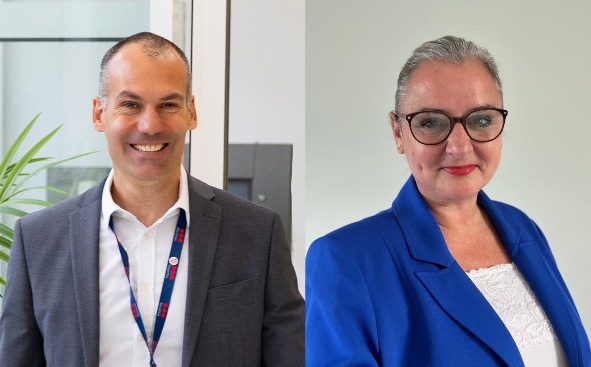

ISJ hears from Vicki Beynon, Security Operations Centre Director, Securitas UK and Omar Abu Rish, Director, Global Security Operations Centre, Securitas.
Security operations centres (SOCs) are at the operational heart of a company’s security strategy.
Modern SOCs integrate intelligence from information sources like surveillance systems, access controls, security alerts and environmental sensors, enabling rapid detection and response to threats.
From unauthorised access and suspicious activity to lone worker monitoring, fire alarm monitoring and notifying the emergency services – it all starts with the SOC.
By providing centralised oversight, they give organisations with multiple sites, high-value assets or complex operations the ability to make faster, more informed decisions, helping reduce risk, ensure compliance and strengthen overall business resilience.
Producing optimal outcomes
As technology evolves, the tools available to support these operations do too – from AI and advanced detection software to real-time data analytics.
Yet, with this surge in technological capability comes a new challenge: Information overload.
In a typical SOC, thousands of information sources may generate multiple alerts every minute, and it is easy for systems to become overwhelmed.
Securitas UK looks after hundreds of thousands of connected devices, including intruder systems and lone-worker detection devices.
The Securitas SOCs span two locations in the UK and over 40 locations globally, providing operational resilience and redundancy.
Clients who require support are varied, from high-risk critical sites to residential properties; response time can range from a matter of seconds to minutes, depending on the case.
In high-priority situations, those seconds or minutes count and could impact the outcome.
With hundreds of thousands of alarms a month and upwards of tens of thousands of calls, the ability of human support in the SOC to correctly identify where support is needed is vital.
Behind every alert and algorithm is a trained professional whose judgment, experience and intuition guide decision-making.
These individuals interpret complex data, prioritise threats and take action armed with the benefits technology has afforded them in each instance.
Inside the SOC
A SOC may conjure up images of walls adorned with dozens of screens.
However, the reality is far more powerful: It’s a proactive, busy hub where technology and people come together to protect operations in real time. Key functions of a SOC could include:
- Alarm and CCTV monitoring – SOC teams are ready to respond swiftly to CCTV or alarm activations as they arise. Naturally, some alarm activations are false, but advanced software can ensure that only genuine alerts involving people or vehicles are flagged, enabling rapid action where required. Operators can intervene in real-time, from issuing verbal warnings through CCTV speakers to activating gates and barriers for legitimate visitors. They can also provide real-time reporting to clients with photos and text updates from the attending officer and have direct access to police control rooms
- Lone worker monitoring – around one-fifth of the UK’s workers work alone or in isolated environments, often at night (Out in the field: Why Lone Worker Monitoring is key – British Safety Council). To mitigate the risk that comes with lone working, best practice is for employers to equip staff with devices or apps that send signals directly to a SOC should something out of the ordinary happen, such as an attack, exposure to hazardous environments, falls, incomplete journeys or missed check-ins. When an alarm is activated, SOC personnel will review audio, video and location data to assess the situation and notify emergency contacts, guards or police as necessary
- Fire alarm monitoring – fire poses one of the greatest threats to any business, with around 22,000 occurring in UK workplaces every year (The Eight Most Common Causes of Workplace Fires – IOSH). SOCs provide constant surveillance to detect fire risks, contacting both the fire department and designated keyholders. This rapid response limits damage, ensures safety and even saves lives
- Incident management service – SOC teams follow tailored protocols for events like IT outages, natural disasters or protests, quickly alerting emergency contacts and deploying the necessary actions, keeping key stakeholders informed throughout
- Out-of-hours helpdesk – it is not all about hostile threats or risk. A SOC also manages customer calls outside regular business hours, ensuring urgent assistance is always available. Operators assess and respond based on pre-agreed protocols, prioritising calls as required. Non-urgent issues are deferred to working hours, while urgent matters are handled immediately, helping ensure round-the-clock customer service
- Temperature monitoring – using advanced sensors, SOCs track environmental factors such as temperature, humidity and flood levels in real-time. If an anomaly is detected, the SOC follows established protocols to alert keyholders, guards or emergency services without delay. Additionally, the system proactively monitors for issues like low battery warnings and tampering, ensuring that infrastructure remains robust and uninterrupted
Data and the future of decision-making
In today’s rapidly changing environment, with massive amounts of data available at our fingertips, the right tools enable professionals to simplify the analysis of historical data.
In the future, it may help provide better forecasting or predictive analytics for SOCs.
Examples could include times of night when there are more attempted break-ins or whether an alarm that goes off at a particular time is more likely a test than a fault.
Providing predictive patterns to learn from will support the future of modern working SOCs.
While generating these insights is essential, it is human operators who interpret these findings, apply them to real-world scenarios and make consistent judgment calls.
Through applying contextual knowledge that goes beyond technical data and making decisions that reflect broader business objectives, they determine the appropriate response, whether that is amending patrols, escalating alerts or coordinating emergency services.
The collaboration between human insight and technology’s capabilities is what ensures comprehensive protection for business sites.
It positions technology as a vital support system but also highlights the necessity for problem-solving and informed decision-making from professionals, both of which combine to produce the best outcomes.
Building resilient teams
Building a resilient, high-performing SOC team is vital. Because SOCs rely on both data and human judgment, strategic investment in people is vital.
This begins with continuous training, ensuring staff have the skills to operate systems, analyse data, and respond effectively and confidently to incidents.
Threats evolve and data becomes more complex, so ongoing training helps personnel refine their decision-making and stay ahead of emerging risks.
Operational structure also plays a key role in a SOC team’s performance.
Shift durations and patterns must be designed to support alertness and reduce fatigue, especially as these roles require sustained concentration.
Structure is crucial to avoid system overload and ensure effective security decision-making.
SOC personnel must also navigate unpredictable environments, making judgment calls on everything from false alarms to more serious situations such as break-ins, flooding and terror attacks.
Handling this unpredictability requires more than basic training: Emotional resilience, trauma-informed response, incident management and professional conduct under pressure are all essential.
Another important factor is team composition.
The work behind the scenes of a SOC is vast and fast-paced, from ensuring accreditations and compliance to guaranteeing security for clients and data privacy.
Recruiting individuals with diverse backgrounds, thinking styles and perspectives can ensure that not only are all the needs in the SOC met, but it can also enhance overall effectiveness.
In many cases, SOCs serve as the first point of contact whenever and wherever unusual events occur.
They rely on skilled personnel who follow agreed escalation procedures and clear prioritisation protocols to minimise risk, and ultimately, protect people, property and assets.