OPTEX launches REDSCAN Lite RLS-1010L indoor LiDAR sensor

James Thorpe
Share this content
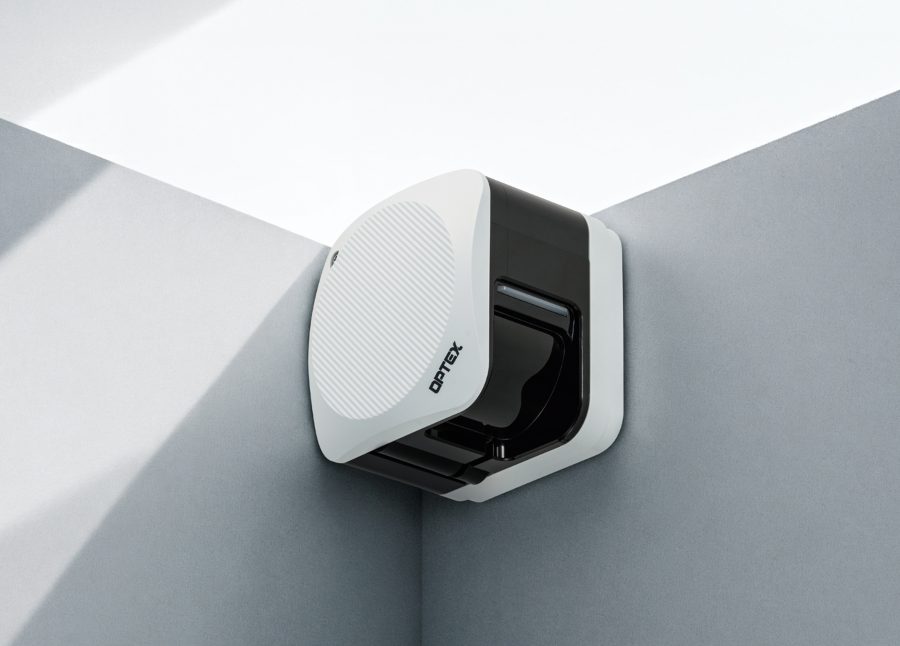
OPTEX has confirmed the release of its REDSCAN Lite LiDAR sensor.
The new REDSCAN Lite RLS-1010L solution has been designed to provide extremely precise and ultra-fast, short-range detection across indoor high-security environments.
OPTEX’s REDSCAN Lite RLS-1010L
The REDSCAN Lite RLS-1010L has been developed to provide total coverage and protect high-risk security zones and narrow indoor spaces that are difficult to protect with traditional sensors.
For instance, it can detect intrusions in the tiny gaps between data centre server racks within cages.
Developed for short-range applications, the sensor uses time-of-flight (TOF) technology to accurately and precisely detect intruders within a range of 10mx10m in just 100 milliseconds.
The sensors are said to perform reliably in any indoor environment and their ability to detect intrusion is not affected by changes in temperature or lighting – they can even perform in total darkness.
Not only can the REDSCAN Lite RLS-1010L be mounted horizontally or vertically, but installing and configuring the sensor is more efficient due to a range of user-friendly features.
“Pioneering the use of LiDAR”
Mac Kokobo, Head of Global Security Business, OPTEX said: “In today’s modern environments, such as datacentres, spaces are becoming tighter and tighter filling with racks and processors.
“This latest REDSCAN Lite has been developed to meet the specific need for rapid detection in tight indoor spaces where high security is crucial.
“It is another example of our continuous focus, since pioneering the use of LiDAR technology for security in 2009, on developing solutions to the real-world problems of customers.”
Enhanced protection
Kokobo continued: “Feedback from customers highlighted a clear need for enhanced protection in small, narrow areas and spaces.
“So the REDSCAN Lite sensor has been designed to fit into the narrow gaps and is engineered to provide highly accurate and fast detection in indoor spaces that other technologies simply cannot reach.”