Astrophysics Exclusive: Speed, safety and science

Eve Goode
Share this content
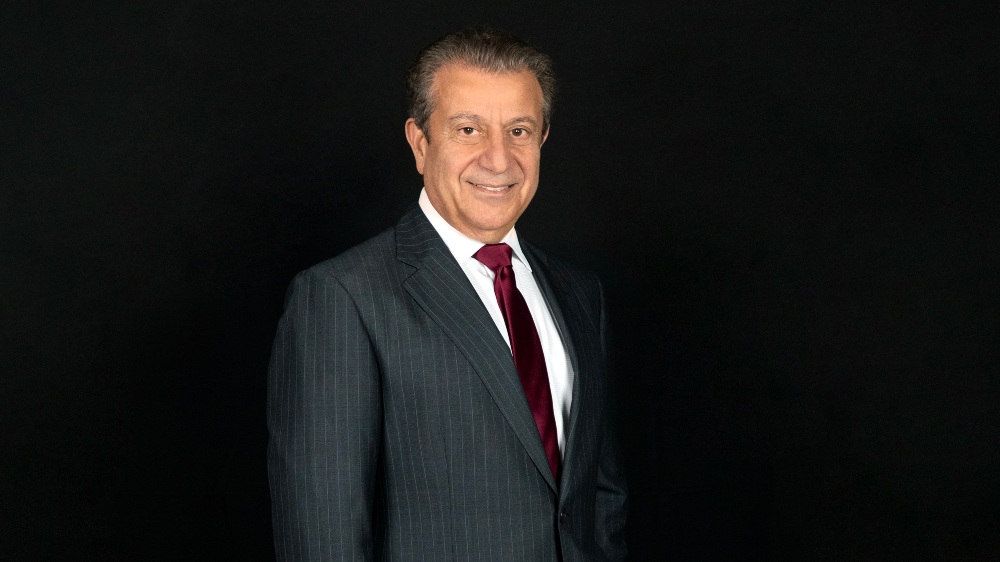
ISJ speaks exclusively with François Zayek, Founder & Chief Executive Officer, Astrophysics.
What are Astrophysics’ key focus areas and objectives for 2025?
For years, Astrophysics has worked toward steadily expanding our high energy presence in the ports and borders sectors of the x-ray security market.
This initiative will persist throughout 2025 and into the foreseeable future, with an emphasis on our HXC LaneScan and HXP FreightScan systems.
These product lines have had a tremendous impact at seaports and border crossings around the world.
To properly support the growth and development of these flagship systems, Astrophysics will sustain close partnerships with customs and port operator clients with a focus on iteratively refining our designs to better address emerging security needs through higher performance, compatibility with new features and complex integration capabilities.
For example, the HXP FreightScan Plus is the LINAC variant of the original version, which used a betatron x-ray source.
It debuted with 330mm steel penetration, which we have since pushed to 360mm through imaging software enhancements.
What developments in screening or imaging technology do you find most exciting?
The proliferation of AI technology is one of the most popular tech talking points and it is most certainly having a significant impact on the x-ray security industry.
Huge strides in automatic detection software have completely shifted expectations. Where predecessor tools like Screener Assist could only ever supplement the performance of a human operator, we are now looking at which parts of the screening process can be fully automated through AI-based solutions.
This even goes beyond the conventional expectation of threat identification: Our HXP supports a “virtual operator” responsible for verifying x-ray image data integrity.
The software looks for truncated images, failed scans and possibly other anomalies to determine when a truck and its attached containers need to redo the x-ray scan.
Astrophysics’ work on security checkpoints for seaports and border crossings also informs our vision for progress in other respects.
Client inquiries, feedback and security roadmaps from major players like US DHS and the World Customs Organization point to a growing need for thoroughly integrated Smart Ports.
These will track every shipment, from the moment it enters the port until it is loaded onto the vessel and leverage complementary technologies to develop a complete picture of the shipment’s contents and detect attempted tampering throughout the screening process.
Can you tell us more about your integrated approach?
Astrophysics closely adheres to two guiding principles for every integration project: Event-based data capture and futureproofing.
Firstly, “event-based” means that real activity triggers each step of the data handling process. Any time an item transitions from one screening system to another, changes hands or passes certain milestones (like an analyst decision), the integrated system records relevant metadata in a cumulative record.
This approach decouples inspection from rigid orders of operations, making the process robust and adaptable.
For example, if an item needs to redo a step after an interrupted scan, the system will automatically record the anomaly and add the new data.
Maintaining a picture of the item’s security posture and relevant history directly facilitates initial analysis and any later forensic review.
Secondly, “futureproofing” means planning for new and upcoming technologies or regulatory standards. It requires laying the groundwork for compatibility, maintainability and expansion to prevent needing wholesale replacement to remain current.
Today, futureproofing means including cloud compatibility, support for AI tools and – when appropriate – common standards like UFF and APIs for key systems.
Cloud-based operation is especially important in the current customs security climate, where the preeminent regulators are moving toward a globalised exchange of security data as a means of running early warning and trusted partnership programs anywhere in the world.
These programs require sharing security information with a shipment’s origin, next stop or ultimate destination on demand – and the cloud is the best technology for accommodating that.
How do x-ray imaging systems used in security differ from those used in, for example, medical applications?
Generally speaking, medical x-ray imaging uses doses of absorbed radiation that are orders of magnitude higher than those used for security applications.
Think hundreds, or even thousands of times higher radiation doses, depending on the specific scan.
For example, doctors need a much more detailed CT model to accurately diagnose something like a brain tumour than an operator needs to spot a security threat concealed among other inanimate objects.
More detail requires more data, more data requires longer exposures and longer exposures mean higher doses.
At Astrophysics, we actually use comparisons with medical x-rays to underscore just how minimalistic and safe our scanners are when it comes to radiation use.
For example, our HXC and HXP respectively scan cars and trucks as they drive through the systems, meaning the drivers and any passengers must pass through the x-ray beam.
Understandably, some prospective clients are worried; they know that radiation exposure is typically something to avoid. Context helps alleviate concerns.
A simple chest x-ray can subject the patient to 53 mR of radiation. That’s 5,300x higher than the HXC’s 0.01 mR dose per scan and people generally understand that medical x-rays are safe.
When we explain that someone could stand next to one of our XIS scanners – operating 24/7 for an entire year – and never come close to the dose of a single medical scan, they can relax.
Differences aside, there’s also some meaningful overlap. The underlying technology is fundamentally identical, albeit tuned for different operating characteristics.
Both medical and security imaging are exploring new advances and methodologies leveraging AI-powered analysis.
These improvements will help us detect cancers and other illnesses sooner, improving projected outcomes and spot innocuous or challenging threats more effectively.
What are the key challenges in developing high throughput x-ray systems? How are you addressing these?
X-ray image quality is directly proportional to the amount of data collected and the amount of data collected is directly proportional to exposure time.
Higher throughput requires faster scanning, which means less exposure time and therefore less data collected.
Achieving high throughput for effective x-ray scanners is a delicate balance between speed and fidelity.
While it’s possible to acquire more data in less time by increasing the x-ray dose rate, we still must consider radiation safety.
The standard expectation is keeping doses “as low as reasonably achievable” (ALARA), meaning the smallest possible dose to successfully perform a required function.
Therefore, at Astrophysics we look to software enhancements for improving image quality and additional time-saving measures in other parts of the screening process.
First and foremost, software advances can make a massive difference. Gaining 30mm of penetration, as we did with the HXP LINAC, is comparable to a hardware upgrade.
We’re expecting other improvements to be within reach. Given that we can achieve better results with the same amount of data, we can also work to maintain imaging performance with less data.
AI also saves lots of time, reducing the need for raw speed to accomplish higher throughput.
It can render decisions that would previously take minutes within seconds and can operate at scale without notably slowing down.
It’s hard to overstate the difference it will make in the coming years. After AI, multiplexing is another powerful means of improving efficiency because it allows scanning to continue while earlier images are still under analysis to minimise delays.
Multiplexing lets multiple analysts working in parallel receive images from any within a group of x-ray machines in FIFO order.
New images go immediately to the next available analyst, reducing bottlenecks caused by complex images that require additional time under inspection.
All that said, Astrophysics is always pushing the envelope for scanning speeds and imaging capabilities through comprehensive testing.
How is AI and machine learning shaping your approach to screening and threat detection?
AI detection software is a promising new tool with tremendous potential within the industry. We’re already using it for diverse applications in every business segment.
There’s also significant demand for developing custom models trained on diverse types of anomalies and threats to international commerce.
Many companies are also interested in specialty models tuned for niche threats or items of interest, like battery analysis or even quality assurance for raw materials.
To be clear, AI goes beyond simple decision-making. It can potentially handle analysis of any directly interpretable data, from manifest reconciliation to troubleshooting diagnostics.
The potential gains in screening accuracy, speed and other aspects of security processing are simply too valuable to ignore.
Beyond that, AI has transformed x-ray images themselves from a simple byproduct of inspection into a valuable commodity – training the detection model is the most difficult part of developing AI software and real images of real threats or anomalies produce the best results.
That makes access to live data from x-ray machines deployed to the field a precious resource for AI research and development.