
A no fly zone is a term often heard in news about international conflicts and security.
It might sound straightforward (an area where flights aren’t allowed), but it carries significant military and political weight.
A no fly zone is when a government or an international coalition declares that certain airspace cannot be used by some or all aircraft.
This concept has been used in wartime to protect people on the ground from air attacks.
It is also used in peacetime to safeguard high-profile events or sensitive locations.
Understanding what no fly zones are, why they are used, and how they work can shed light on this important aspect of modern security policy.
What Does No Fly Zone Mean?
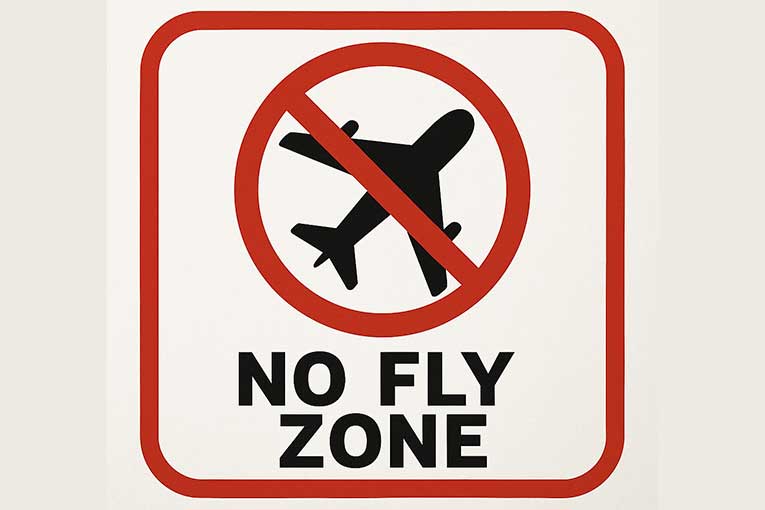
A no fly zone is essentially a prohibition on aircraft flying over a designated area.
It normally means that certain aircraft (for example, military planes of a hostile nation) are not permitted to enter specific airspace.
Such zones are usually declared during conflicts or crises.
They can cover an entire country or just a part of it.
The key point is that a no fly zone isn’t just a friendly request.
It is typically enforced by military power.
This means whoever declares a no fly zone must be ready to patrol the skies and, if necessary, stop any aircraft that violates the ban.
In other words, if an unauthorised plane tries to fly in a no fly zone, it risks being intercepted or even shot down.
No fly zones are intended to deny the use of the skies to a particular enemy.
They have been used as a tool to limit fighting or protect civilians on the ground by keeping hostile aircraft away.
It’s important to note that the term can also apply outside of war contexts.
Sometimes authorities establish similar restricted airspaces for major events or sensitive areas.
For example, there was an air exclusion zone over London during the 2012 Olympic Games to guard against any terrorist air threats.
Why No Fly Zones are Used
No fly zones are used as a strategic tool for various reasons, mainly to protect people and influence events on the ground.
Humanitarian Needs
One of the most common reasons is humanitarian needs, such as preventing aggressive regimes or forces from bombing civilian populations.
By keeping hostile aircraft out of the sky, a no fly zone aims to stop aerial attacks.
This includes things such as bombings or chemical weapon drops, that could harm civilians or rebel forces.
For instance, after the 1991 Gulf War, Western allies set up no fly zones over Iraq to stop Saddam Hussein’s air force from attacking Kurdish and Shia communities.
The idea was that if Iraqi warplanes were barred from flying, they couldn’t be used to repress those groups from the air.
Politics
No fly zones can also serve broader military and political purposes.
They are a way for powerful nations or the international community to exert control without fully invading a country.
By denying an adversary the use of its air force, one can limit that adversary’s ability to wage war or commit atrocities from the air.
In the 1990s and 2000s, no fly zones became a means to prevent authoritarian rulers from brutally suppressing rebellions and terrorising civilians with air power.
Essentially, they tilt the balance in favour of those who do not have planes (like rebel groups or vulnerable populations) by removing the other side’s aerial advantage.
International Demands
Another reason no fly zones are used is to enforce international demands or peace agreements.
For example, during the Bosnian War in the early 1990s, the United Nations imposed a no fly zone.
This was to pressure the warring parties to stick to ceasefire commitments and to protect civilians from air strikes.
This was enforced by NATO aircraft as a part of Operation Deny Flight.
Events
In more everyday situations, security no fly zones are established to protect high-profile events from potential air threats.
Major events like the Olympics or areas like government buildings may have temporary or permanent flight restrictions.
These are usually precautionary, aimed at preventing terrorist attacks using aircraft.
While these are not ‘no fly zones’ in the wartime sense, the principle is similar: some airspace is off-limits to ensure safety.
How are No Fly Zones Decided?
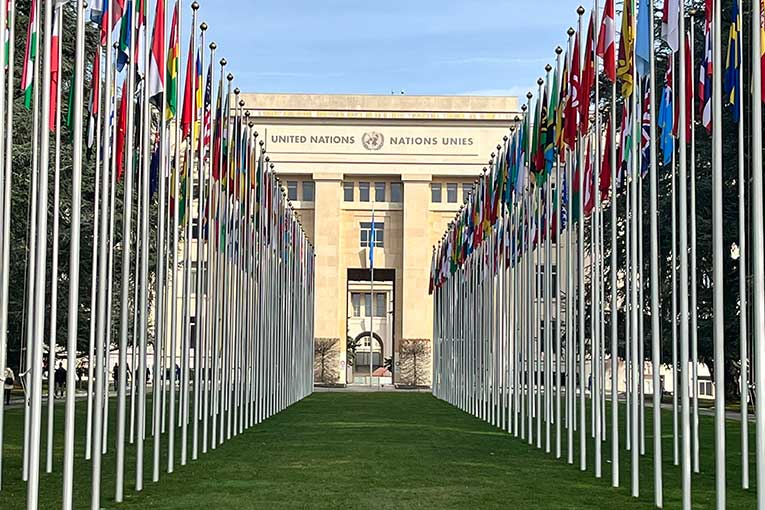
Deciding to establish a no fly zone is a major political and legal step, typically involving international agreement.
In many cases, the decision starts at the United Nations.
The UN Security Council can authorise a no fly zone under Chapter VII of the UN Charter, which deals with threats to peace.
Chapter VII allows the UN to approve military measures if peaceful methods fail to resolve a conflict.
However, getting UN approval isn’t always easy.
Any one of the five permanent Security Council members (the United States, United Kingdom, France, Russia, and China) can veto such a decision.
In situations where one of those major powers is involved or has a strong stance, a UN-approved no fly zone may be impossible.
A recent example is Syria or Ukraine.
Proposals were made to impose no fly zones to protect civilians, but they didn’t pass at the UN because of the risk of direct confrontation with a veto-wielding power.
If the UN route is blocked, there are a couple of other ways a no fly zone might be established.
Coalition Agreement
One is through a regional or coalition agreement.
A group of allied countries might decide on their own to enforce a no fly zone.
This happened in Iraq in the 1990s.
The US, UK, France enforced no fly zones over Iraq without an explicit new UN resolution.
Country Consent
Another pathway is with the consent of the country concerned.
If a nation’s legitimate government requests international help to close its airspace, allies can step in.
For instance, Ukraine’s government could theoretically invite NATO to enforce a no fly zone over Ukraine’s territory.
In that scenario, there’s a legal argument that it’s not aggression, but assistance.
How are No Fly Zones Enforced?
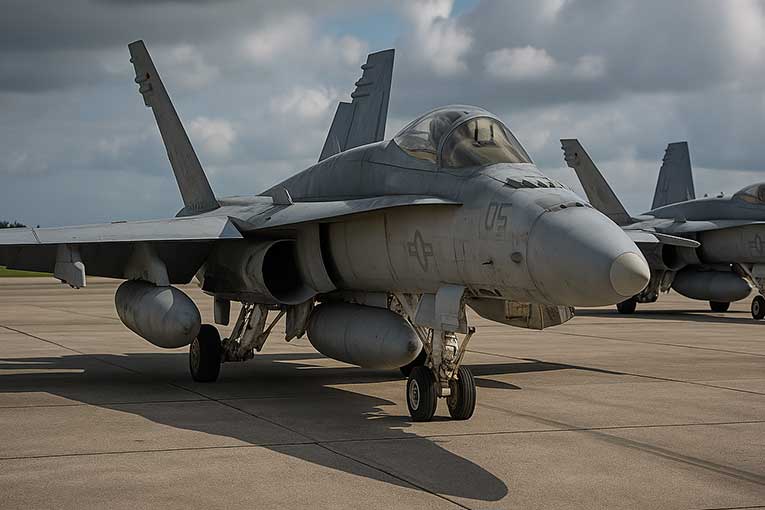
Establishing a no fly zone on paper is one thing but making it a reality in the sky is another.
Enforcing a no fly zone means actively preventing unauthorised aircraft from entering the forbidden airspace.
This is a military operation that typically involves several components:
Air Patrols
Countries enforcing the zone will deploy fighter jets and surveillance planes to continuously monitor the designated airspace.
If a plane is detected where it shouldn’t be, fighter jets can intercept it.
Pilots may issue warnings or orders to turn back.
If the aircraft does not comply, they may be forced to land or, in extreme cases, be shot down.
Suppressing Air Defences
It’s not just about chasing enemy planes.
Enforcement also means neutralising ground-based threats.
The country being restricted may have missile systems or anti-aircraft guns.
Enforcers often begin by disabling those threats with targeted strikes.
This tactic, known as Suppression of Enemy Air Defences (SEAD), helps ensure the safety of patrol aircraft.
Rules of Engagement (RoE)
Military forces operate under clearly defined rules known as Rules of Engagement.
These dictate when pilots can act.
This can include whether they must wait for permission or can respond immediately to threats.
The rules are shaped by the legal mandate and the goals of the mission.
The aim is to balance assertiveness with caution, avoiding accidental engagements.
Examples of No Fly Zones
There are some famous examples of no fly zones.
Iraq (1991–2003)
After the Gulf War, the US, UK, and France imposed two no fly zones over Iraq to protect Kurdish and Shia populations.
These zones lasted more than a decade and were patrolled regularly by coalition aircraft.
Although they prevented air attacks, they didn’t stop all violence, as Saddam Hussein’s forces continued ground assaults.
Bosnia and Herzegovina (1993–1995)
To reduce air attacks during the Bosnian War, the UN declared a no fly zone over Bosnian territory.
NATO enforced this with Operation Deny Flight.
Several violations occurred, and NATO took action, including shooting down Serbian aircraft.
The no fly zone limited bombing, though it couldn’t prevent all atrocities.
Libya (2011)
During Libya’s civil war, the UN approved a no fly zone to protect civilians.
NATO enforced the ban with air patrols and strikes on Gaddafi’s air defences.
The action helped prevent large-scale attacks on rebel-held cities and contributed to the collapse of Gaddafi’s regime.
What is a ‘Limited’ No Fly Zone?
A ‘limited no fly zone’ is a more restricted version of a standard no fly zone.
Instead of banning all flights over an entire country, it focuses on a smaller area such as a specific city or a humanitarian corridor.
The aim is often to protect civilians, enable aid deliveries, or allow evacuations without committing to a full air war.
Some proposals, like those discussed during the Ukraine conflict, suggested safe corridors for refugees near the border.
However, even a limited no fly zone still needs military enforcement.
If enemy aircraft enter that space, they must be stopped.
That means any enforcement power must be willing to intercept or even shoot down violators.
So while ‘limited’ may describe the area, the risks and commitments are still serious.
In practice, limited no fly zones remain controversial.
They are complex to implement and may escalate tensions with powerful opponents.
Key Takeaways
You should now have more of an understanding of no fly zones.
A no fly zone is a serious military and political tool used to deny airspace to certain aircraft.
While the concept may sound simple, it involves complex decisions, international law, and the risk of military confrontation.
They are costly to enforce and carry the risk of escalation.
However, when used carefully they can save lives and limit conflict from above.
Understanding no fly zones helps make sense of the headlines.
When leaders debate this option, it signals a moment of intense concern and a willingness to act decisively.
But as history shows, controlling the skies is never without consequence.