
Explosive devices, whether a leftover bomb from a past conflict or a homemade explosive, pose a serious threat to lives and property.
Safely dealing with such hazards is critical.
This is where Explosive Ordnance Disposal (EOD) comes in.
EOD specialists are the highly trained experts who handle and neutralise dangerous munitions.
From clearing old landmines in former war zones to defusing a suspicious package in a city centre, their work keeps people safe.
In this article, we will explore what Explosive Ordnance Disposal means, how bomb disposal works, the tools and robots involved, and the risks and training for EOD technicians.
What is Explosive Ordnance Disposal (EOD)?
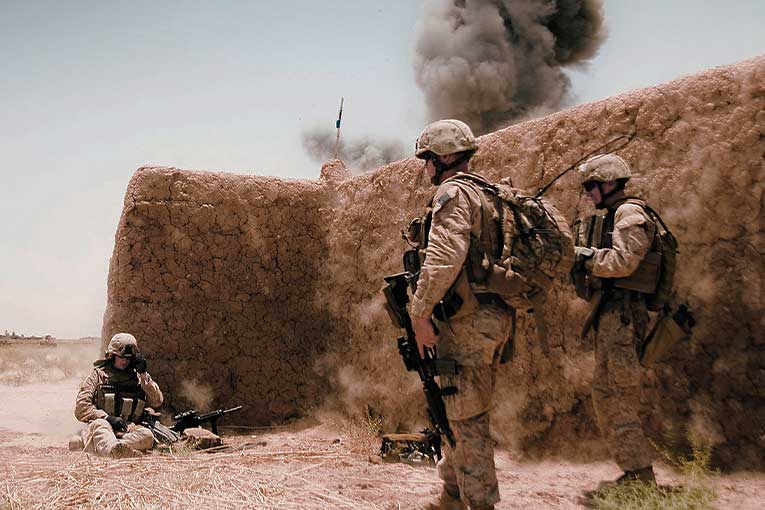
Explosive Ordnance Disposal refers to the practice of safely detecting, rendering safe, and disposing of explosive ordnance.
The term ‘explosive ordnance’ means military munitions or explosives – for example, bombs, artillery shells, grenades, landmines, or other explosive warheads.
EOD is often simply called bomb disposal.
It involves a set of procedures and techniques to deal with unexploded or live explosives so that they do not detonate and cause harm.
EOD is carried out by specially trained personnel, commonly known as EOD technicians or bomb disposal experts.
These professionals serve in the military, police (bomb squads), or specialised civilian agencies.
The field of EOD emerged prominently during the 20th century (notably in World War II, when bomb disposal units were formed to handle unexploded bombs during the Blitz).
Today, EOD experts handle a wide range of explosive threats – from old unexploded ordnance (UXO) left over from wars to modern improvised explosive devices (IEDs) used by terrorists.
The primary goal in EOD is always the same: prevent an explosion and remove the hazard.
What are the Steps in Explosive Ordnance Disposal?
Disposing of a bomb or explosive hazard is a careful, methodical process.
Explosive Ordnance Disposal technicians follow a series of well-defined steps to ensure safety and success.
While situations can vary, the typical steps in explosive ordnance disposal include the following:
Detection and Identification
First, the presence of a suspicious item or known ordnance is detected.
This might happen through a report by the public, military patrols, or detection equipment.
The EOD team then identifies what type of explosive or device it is (for example, a grenade, a large aerial bomb, or an IED).
Knowing the exact type of device helps determine the best approach to deal with it.
Securing the Area
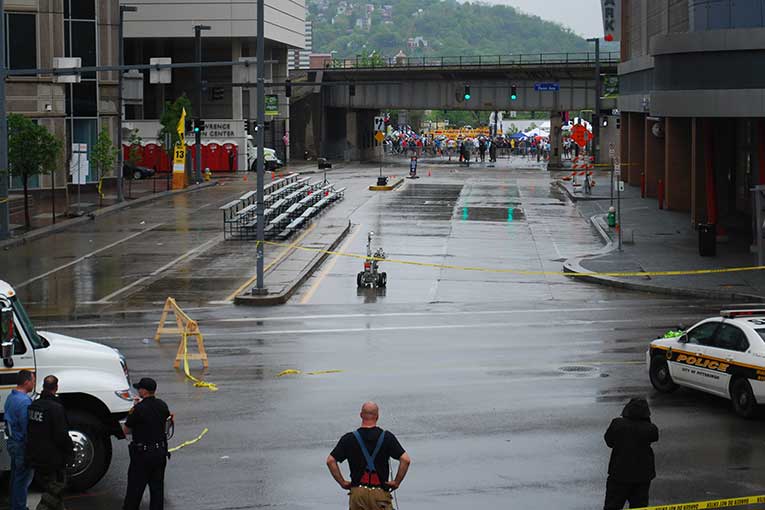
Once an explosive threat is confirmed, the area around it is secured and evacuated.
Safety is paramount, so cordons are established at a safe distance.
People in nearby buildings or around the site are moved away.
This step ensures that if the device accidentally detonates, casualties and damage will be minimised.
EOD personnel also set up a command post at a safe distance to coordinate the operation.
Evaluation and Planning
The EOD team carefully evaluates the device and the surrounding environment.
They look at factors like the device’s condition, any visible timers or wires, and whether it might have anti-tampering traps.
They also consider the surroundings, for instance, is it in a public space, underwater, or near critical infrastructure?
Based on this assessment, the team formulates a plan to render the device safe.
This plan includes deciding on tools and techniques to use (robotic disposal, a certain type of disarming technique, or a controlled detonation).
At this stage, communication with other emergency services is maintained in case additional support (like firefighters or medical teams) is needed.
Render Safe Procedure (Disarming)
This is the most delicate step.
The render safe procedure means making the device safe so it won’t explode.
Depending on the situation, EOD technicians have various ways to do this.
They might defuse the bomb by disabling its firing mechanism or detonator (for instance, by carefully removing or disconnecting it).
In other cases, they might use a technique to jam or interrupt the firing circuit, for example, using a water disruptor (a device that shoots a high-pressure water jet to break apart bomb components).
Often, EOD robots or remote tools are used to perform these actions from a safe distance.
The goal is to neutralise the explosive without it detonating.
This step requires immense focus and steady hands, as one wrong move could trigger the device.
Removal or Disposal
Once the device is disarmed (or if it is deemed too risky to disarm), the next step is disposing of it safely.
If it has been rendered safe (for example, the detonator removed), the technicians might remove the explosive ordnance from the area.
They could transport it in a special secure container to a safe location.
If the device is too unstable to move or disarm, the team may opt for a controlled detonation on site.
This means they place a small demolition charge on or near the explosive and set it off in a controlled manner to destroy the device when everyone is at a safe distance.
Before doing this, they ensure the blast will be contained as much as possible (for instance, by sandbags or bomb blankets) and that the area is fully evacuated.
Whether transported or detonated in place, the explosive threat is now eliminated.
Verification and Site Safety
After removal or detonation, the EOD team inspects the area to make sure the threat is completely gone.
They check for any remaining explosives or fragments.
If it was a larger bomb, they verify that no part of it is left that could still pose danger.
They also collect evidence if necessary (especially in cases of criminal or terrorist devices, where forensic evidence might be important).
Finally, once everything is clear, the area is declared safe and any roadblocks or evacuations are lifted.
What Equipment is Used for Explosive Ordnance Disposal?
Explosive Ordnance Disposal technicians rely on a wide array of specialised equipment to carry out their mission safely.
This equipment helps them approach, examine, and neutralise explosive devices while keeping themselves and others as safe as possible.
Key pieces of EOD equipment include:
Protective Bomb Suit
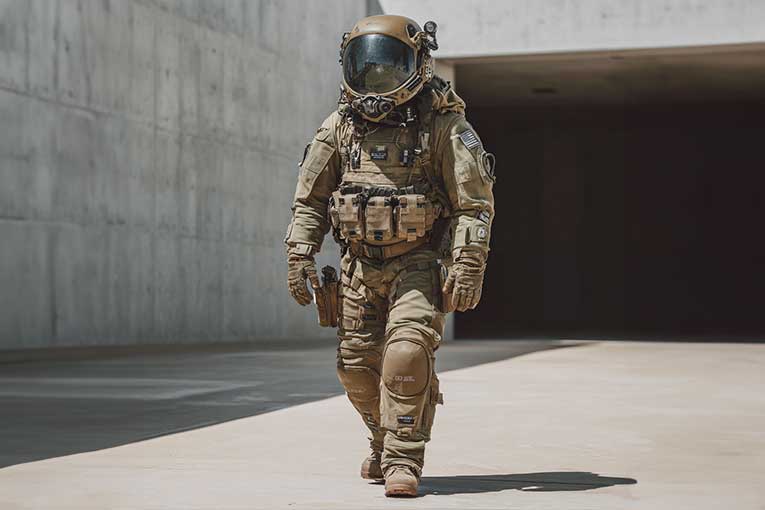
One of the most recognisable pieces of EOD gear is the bomb suit.
This is a heavy, armoured suit made of multiple layers of tough ballistic material.
It includes a helmet with a visor, a reinforced torso covering, and protective leggings and arms.
The bomb suit is designed to shield the technician from shrapnel (flying fragments) and blast pressure in case a device explodes while they are working on it.
While extremely bulky and hot to wear, these suits have saved many lives by reducing injuries from unexpected blasts.
They allow a technician to get relatively close to a suspect device when necessary, such as to attach a defusal tool or inspect it, with far more protection than regular clothing.
However, even with a bomb suit, a close-range explosion can be deadly, so suits are a last line of defence rather than an invitation to take unnecessary risks.
Bomb Disposal Robot (Remotely Operated Vehicle)
Robots play a crucial role in modern bomb disposal.
These are remote-controlled machines, often on wheels or tracks, equipped with cameras and robotic arms.
An EOD robot allows technicians to inspect and even manipulate a suspected explosive device from a safe distance (often tens or hundreds of metres away).
The robot’s cameras give the team a close-up view of the bomb, and its mechanical arm can carefully move objects, remove fuses, or place counter-charges.
Some robots can climb stairs, traverse rough terrain, and even drag suspicious packages away from crowds.
Using robots greatly reduces risk to human life – if the device detonates during inspection or handling, only the robot is destroyed.
Notably, the United Kingdom was a pioneer in using bomb disposal robots (such as the famous ‘Wheelbarrow’ robot first used in the 1970s), and today just about every EOD unit in the world has various robots available.
Robots come in different sizes: from small, portable robots for confined spaces, to larger ones that can lift heavy ordnance.
They are one of the most important tools for EOD, often taking the first look at a threat so humans can stay back.
X-Ray and Detection Equipment
Identifying what’s inside a bomb is critical.
Portable X-ray systems are standard EOD tools that let technicians ‘see’ the internal components of a suspicious device without touching it.
The EOD team will carefully slide an X-ray panel or film next to the suspect package and use a battery-powered X-ray generator to take an image.
This can reveal wiring, batteries, pipes, or explosive material inside a package or bomb, helping the team determine how to disarm it.
Along with X-rays, EOD units use other detection devices too.
Metal detectors and ground-penetrating radar can help locate buried mines or shells.
There are also specialised explosives trace detectors and chemical sniffers that can alert if explosives or chemical agents are present.
All these devices help the team assess the hazard before taking action.
Disrupters and Specialized Tools
EOD technicians have developed ingenious tools to disarm bombs from a distance.
One such tool is the water disruptor – essentially a modified shotgun or cannon that fires a blast of water (often with a slight explosive charge behind it).
The jet of water can sever wires, destroy detonators, or otherwise disable a bomb’s firing mechanism in a fraction of a second, faster than the bomb’s trigger can activate.
Besides disruptors, EOD kits include many traditional tools:
- Cutters, crimpers, and screwdrivers – used for cutting wires or opening explosive casings carefully.
- Hook and line kits – ropes, pulleys, and grappling hooks for moving suspicious items from a safe distance.
- Bomb blankets or blast shields – heavy ballistic coverings placed over small devices to contain shrapnel if they explode.
EOD technicians also carry standard demolition charges and blasting caps which they use for controlled detonations of bombs.
Essentially, EOD toolkits have everything from high-tech gadgets to simple ropes – whatever might help to neutralise the threat safely.
Bomb Containment and Transport Equipment
After rendering a device safe, it often needs to be removed for disposal.
For this, teams use bomb containment vessels.
These are thick steel containers, sometimes spherical or cylindrical, designed to hold an explosive safely.
If a device happens to detonate inside the chamber, the strong container absorbs the blast and fragments.
You might see such containment units on trailers or built into the back of EOD trucks – they look like small metal tanks.
EOD units also have specialised bomb disposal vehicles (vans or trucks) which carry all their equipment and robots.
These vehicles sometimes include mechanical arms or ramps to help load explosives or maneuver robots.
They are not ‘bombproof’ themselves, but serve as mobile workshops and transport.
Additionally, for dealing with military ordnance like artillery shells, there might be cranes or lifting tools to help pick up heavy bombs safely, and sandbagging materials to build blast barriers.
In some military operations, EOD teams even use armoured bulldozers or carriers to move amidst minefields.
All of this equipment together enables EOD personnel to approach a hazardous device, diagnose it, disarm it, and remove it all while keeping at a maximum safe distance.
How Dangerous is Explosive Ordnance Disposal?
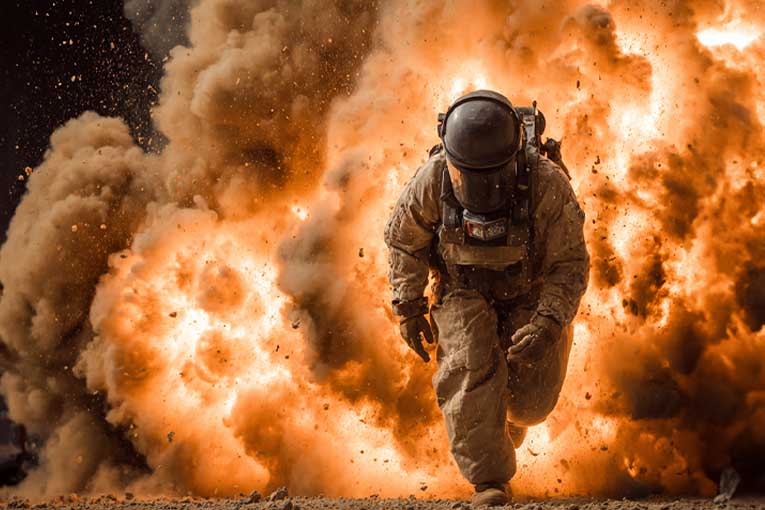
Explosive Ordnance Disposal is often described as one of the most dangerous occupations in the world – and with good reason.
After all, EOD technicians routinely work with bombs and explosives that could kill or injure anyone nearby if something goes wrong.
The inherent risk of dealing with live explosives means that bomb disposal work can turn deadly in an instant.
Despite all the training, protective gear, and robotics, the danger can never be completely eliminated.
Physical Dangers
The most obvious risk is being caught in an explosion.
If a device detonates unexpectedly or a mistake is made during the defusing process, an EOD technician could be seriously injured or killed.
Fragments (shrapnel) from a blast travel at extremely high speeds and can be lethal.
The blast overpressure itself can be fatal or cause severe injuries.
Even wearing a bomb suit, a technician very close to an explosion is at great risk – the suit might reduce injuries but not entirely prevent them.
There are many recorded incidents of EOD personnel who lost limbs or lives in the line of duty, especially during wartime operations where they had to disarm roadside bombs under combat conditions.
For example, during conflicts in some of the world’s most dangerous countries, bomb disposal experts were frequently in harm’s way; some were killed by IEDs that detonated during attempts to make them safe.
Even in peacetime, old munitions can be treacherous – occasionally, decades old bombs discovered in cities have exploded while being handled by experts, causing casualties among even highly experienced technicians.
Every operation carries a weight of uncertainty, which is why EOD work is so tense.
Safety Measures and Risk Mitigation
Because the stakes are so high, EOD teams employ strict safety protocols.
They treat every suspect device with maximum caution.
They use remote tools like robots, disrupters, and lengthy procedures to avoid putting a person next to the bomb until absolutely necessary.
They also establish large safety cordons to ensure if something does go wrong, the damage is limited.
In many cases, an EOD team will choose to carry out a controlled detonation (blowing the device up on their own terms) rather than attempt a manual disarm, especially if the device is complex or too dangerous.
This approach sacrifices property (and the explosive itself) but can save lives.
The extensive training EOD techs undergo also prepares them to stay calm and make sound decisions under pressure, which is vital for safety.
Psychological and Long-term Dangers
Beyond the immediate physical hazards, there’s also significant mental strain.
EOD technicians operate under extreme pressure, knowing that a single tiny error could be fatal.
This type of stress, repeated over many incidents or a long career, can take a psychological toll.
Many EOD veterans have spoken about the stress of the job and some have experienced post-traumatic stress disorder (PTSD) or anxiety.
The concentration required and the adrenaline of working on a live bomb is immense.
Some EOD techs describe the work as long periods of careful planning and procedure punctuated by moments of sheer terror if something unexpected happens.
Additionally, working with explosives can involve exposure to hazardous chemicals (in explosive materials) or, in certain cases, radiation or toxic substances if chemical or radiological dispersal devices are involved.
Proper protective measures are taken, but there’s always some risk to health in handling these dangerous materials.
How do you Train For Explosive Ordnance Disposal?
Training to become an Explosive Ordnance Disposal technician is long, difficult, and thorough.
The complexity and danger of the job mean that EOD training programmes must prepare personnel for a wide range of situations and ensure they have extensive knowledge of explosives.
Here’s an overview of how one trains for explosive ordnance disposal:
Selection and Prerequisites
Typically, EOD training is undertaken by members of the army or police who volunteer for this speciality.
Candidates usually must meet stringent requirements before being accepted.
For example, they need a clean record, high stress tolerance, and often have to pass aptitude tests.
Physical fitness is important too – carrying heavy bomb suits or equipment requires strength and endurance.
In many militaries, EOD is an all-volunteer career field because of its high risk; trainees must truly want to do it.
Formal Schooling
The core of EOD training is a formal technical school or course that can last many months.
In the United States and many allied countries, the military EOD training is about 8 – 10 months long and is considered one of the toughest schools.
During this training phase, students learn the science of explosives – how different types of munitions work, how fuses and detonators function, and the various ways bombs can be armed or booby-trapped.
They study everything from conventional military ordnance (like mines, shells, missiles) to chemical and biological ordnance and improvised devices.
Importantly, they are taught the standard procedures for disarming or destroying each type.
This includes hands-on work with inert (fake or defused) devices to practice.
They also learn how to use all the specialized EOD equipment: operating robots, using X-ray gear, setting up explosive charges, and wearing the bomb suit properly.
Stress and Safety Training
A significant part of EOD training is learning to maintain calm and think clearly under pressure.
Instructors often create scenarios that simulate the intense stress of a live bomb scene to test and build the student’s nerves and decision-making.
Trainees might have to perform a timed drill in a bomb suit or handle multiple simulated threats at once.
Attention to detail is hammered into them – as even a tiny mistake in procedure can be deadly in real life.
Safety protocols are drilled repeatedly so that future EOD techs follow them automatically.
Certification and Qualification
Trainees usually must pass both written exams and practical evaluations to graduate.
For instance, they may be given a mock bomb and have to successfully make it safe using the correct procedure while instructors watch.
Those who pass all the requirements earn their qualification (such as an EOD badge or licence).
This qualification means they are officially an EOD technician, but it’s really just the beginning of their learning.
On-the-job Training
After formal school, new EOD techs often apprentice under seasoned operators.
They might start with simpler tasks in a team and gradually take lead on more complex disposals as they gain experience.
Continuous training is a cornerstone of the EOD career.
Every month or so, teams carry out refresher training and drills.
They keep up to date on new bomb-making trends or new devices encountered in global conflicts.
For example, if a new type of IED is being used by terrorists somewhere, EOD units worldwide will study it and train on how to defeat it.
They also practice with their equipment regularly to ensure proficiency.
Many EOD units run scenario exercises (like mock roadside bomb incidents or suspicious luggage at an airport) to keep skills sharp.
Conclusion
You should now have more of an understanding of Explosive Ordnance Disposal.
Explosive Ordnance Disposal is a field that combines advanced technical know-how, steady nerves, and a strong desire to protect others.
A bomb is unforgiving of mistakes, so the work of an EOD team is painstaking and disciplined.
Thanks to their efforts, countless lives have been saved and daily life can carry on safely.
From humanitarian mine clearance in former war zones to preventing terrorist bombings in cities, Explosive Ordnance Disposal units around the world perform a critical service.
In essence, EOD is about rendering harm inert – taking objects designed to destroy, and neutralising them with skill and care.
It is a job that often goes unheralded, but every time a dangerous explosive is safely dealt with, we are reminded of the importance of these quiet professionals on the front lines of safety.